
 Predictive Maintenance
Prevent Downtime with Agents That See Failure Coming
AccelVeo's AI agents monitor your equipment around the clock—detecting early signs of wear, predicting failures, and recommending maintenance actions before breakdowns disrupt production. Reduce unplanned downtime, extend asset life, and keep your lines running.
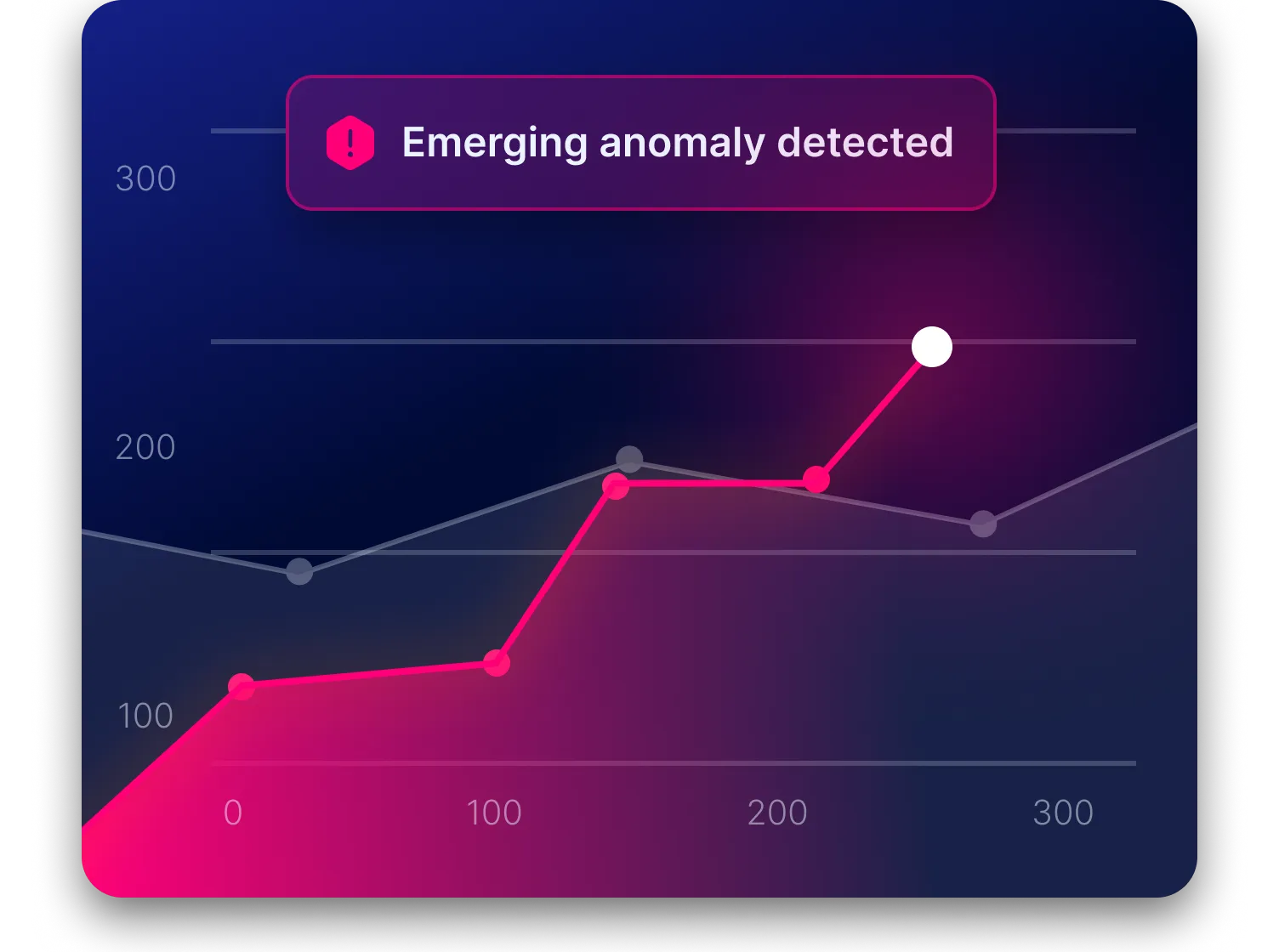
Health Monitoring That Learns Your Operation
AccelVeo continuously monitors your critical assets using vibration, temperature, acoustic patterns, current draw, and process variables—detecting the early signatures of wear, misalignment, or fatigue before operators can sense a problem.
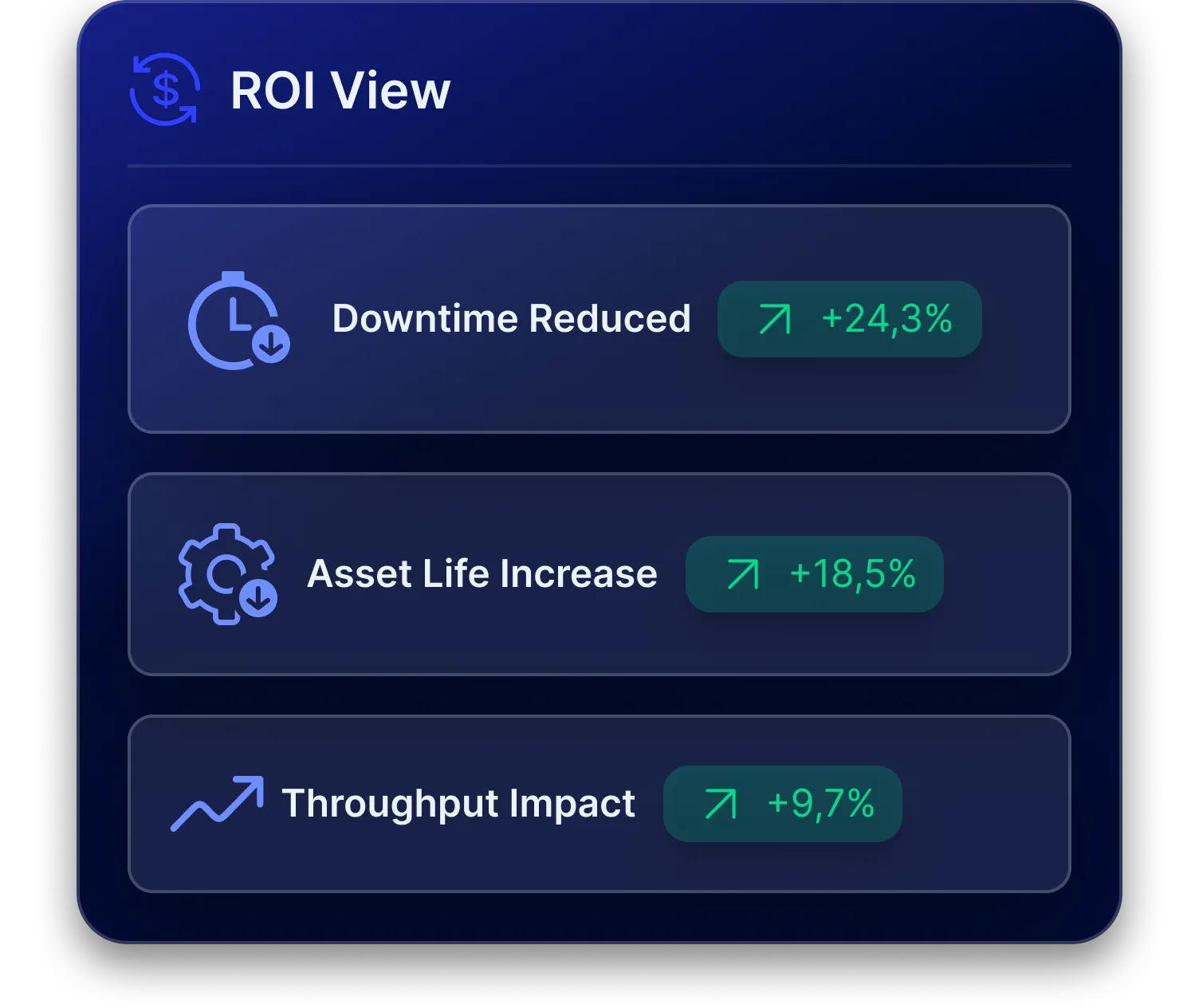
Reduced Downtime, Longer Asset Life, Higher Throughput
By catching issues early and guiding just-in-time maintenance, you maximize equipment availability, extend the useful life of high-value assets, and keep production flowing without the delays of unexpected breakdowns.
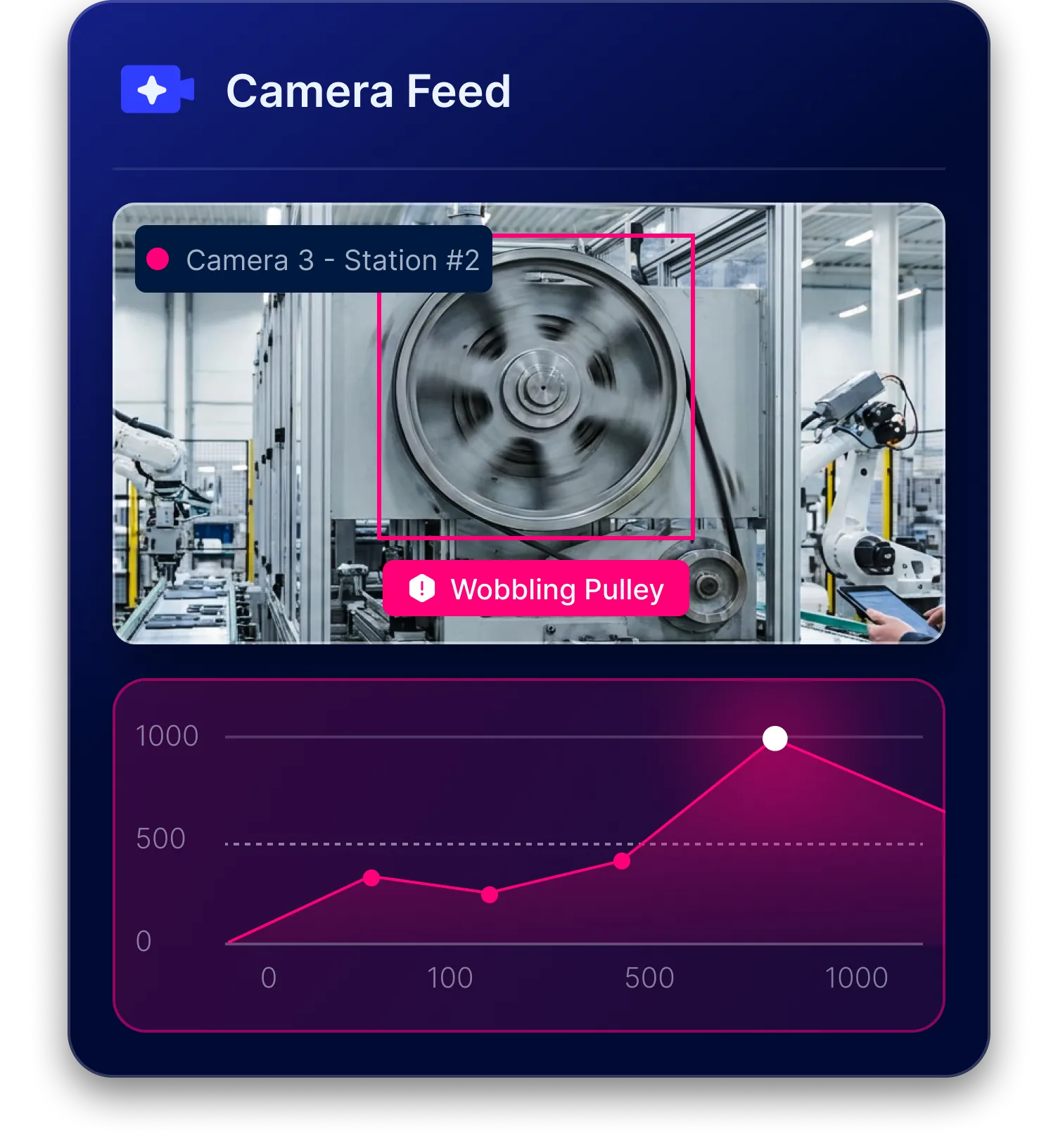
Vision + Sensor Fusion for Higher Accuracy
AccelVeo combines camera-based visual inspection—spotting leaks, unusual vibrations, or visual damage—with traditional sensor data to give you a fuller picture of asset health and more accurate failure predictions.
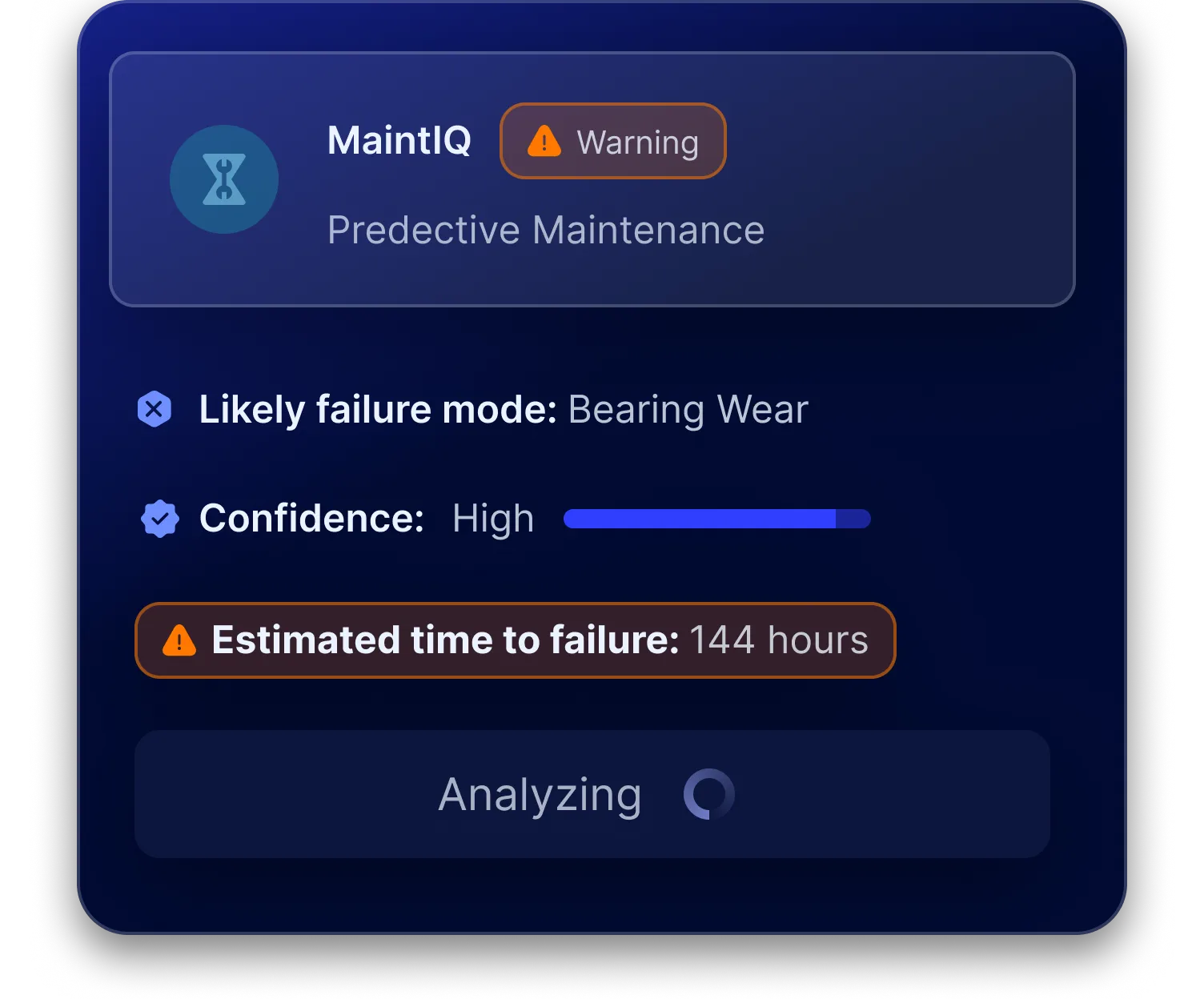
Predict Failure Modes Before They Happen
Agents identify the likely failure modes for each asset—bearing wear, motor overheating, hydraulic leaks—and surface them with estimated time-to-failure so maintenance teams can plan ahead, not react in crisis.
Automatic Work Orders and Maintenance Plans
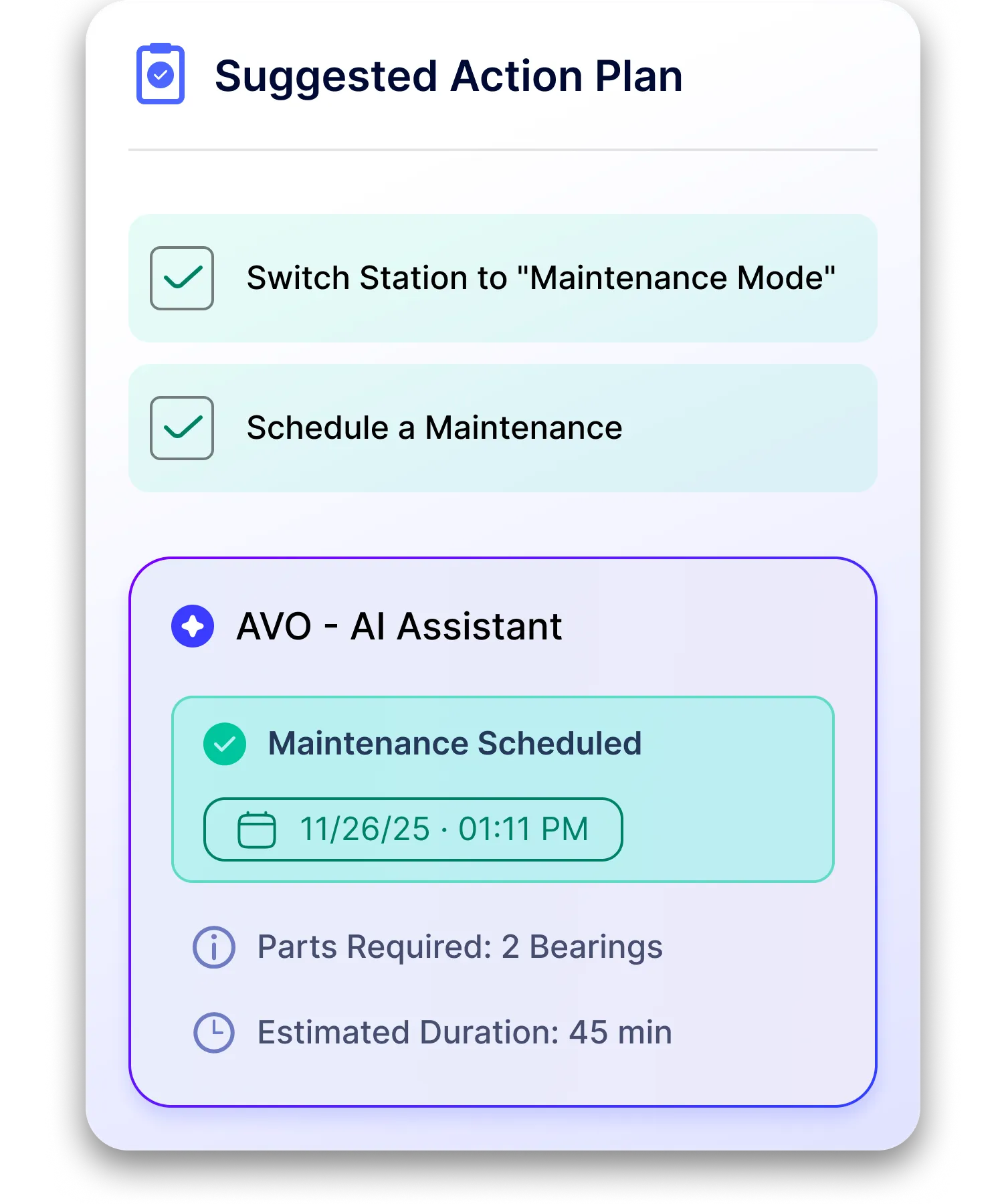
When agents detect impending issues, they automatically draft work orders, maintenance tasks, and even parts requisitions—ready for review and approval, not manual paperwork.
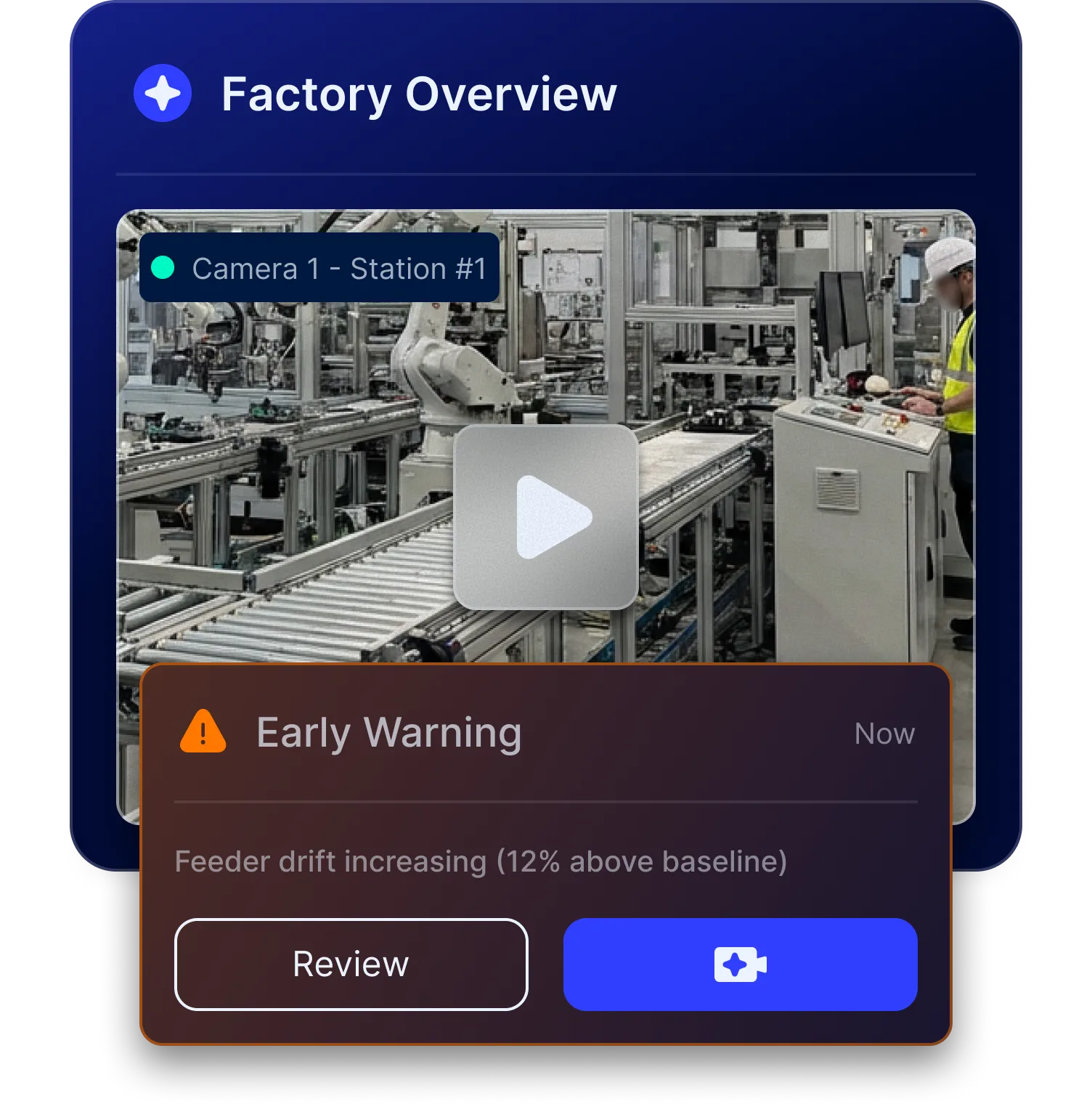
Early Warning Signals for Operators and Supervisors
Alerts are sent to the right people at the right time—supervisors, maintenance planners, and floor operators—so teams can coordinate proactive repairs without halting production.
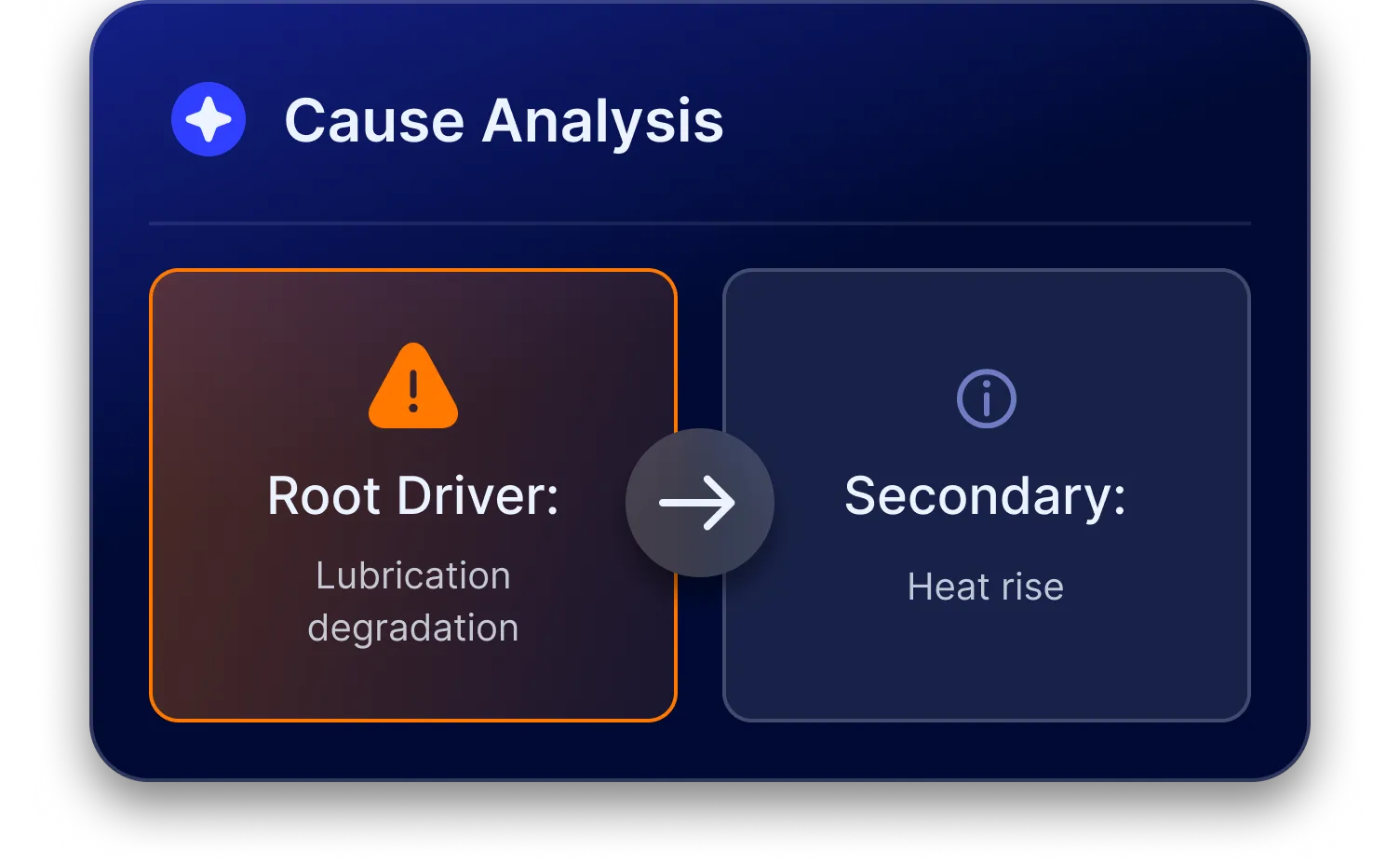
Automated Root-Cause Insights for Faster Fixes
When something goes wrong, agents trace the chain of events—correlating sensor anomalies, process deviations, and visual evidence—to highlight the most likely root cause, reducing time spent troubleshooting.
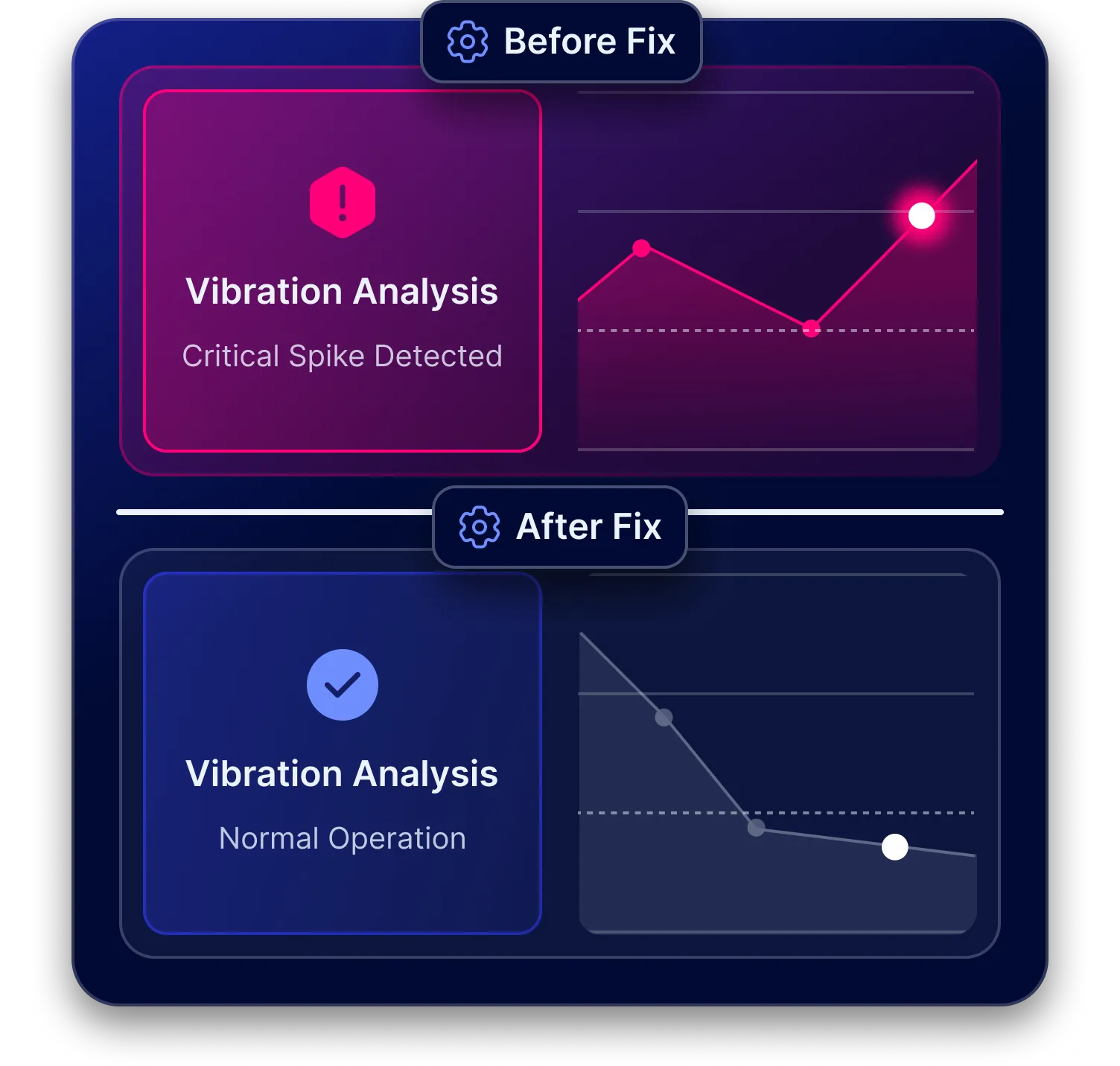
Verification After Maintenance
After repairs are completed, agents verify that the asset is performing as expected—confirming vibration levels, temperatures, and outputs are back to baseline—so you can confidently return to full production.
Frequently Asked Questions
Reactive vs Preventive vs Predictive Maintenance
| Criteria | Reactive | Preventive | Predictive (AI) |
|---|---|---|---|
| Approach | Fix after failure | Scheduled intervals | Condition-based, AI-driven |
| Downtime Impact | High - unplanned stops | Moderate - planned stops | Low - just-in-time repairs |
| Cost | Highest (emergency + damage) | Moderate (some waste) | Lowest (optimized timing) |
| Equipment Lifespan | Shortened by failures | Standard lifespan | Extended 10-20% |
| Parts Inventory | Emergency stockpiling | Over-ordering common | Optimized parts ordering |
Related Solutions


