
 Quality Control
Catch defects faster, with fewer manual checks
AccelVeo's AI agents inspect every part at every stage—detecting defects in real-time, classifying severity automatically, and linking issues to root causes. Reduce scrap, eliminate escaped defects, and free your team from tedious manual inspection.
Multi-Stage Inspection—Incoming, In-Process, Final
AccelVeo deploys AI-powered inspection at every critical stage—receiving dock, in-process checkpoints, and final QC. Catch defects where they occur, not at the end of the line.
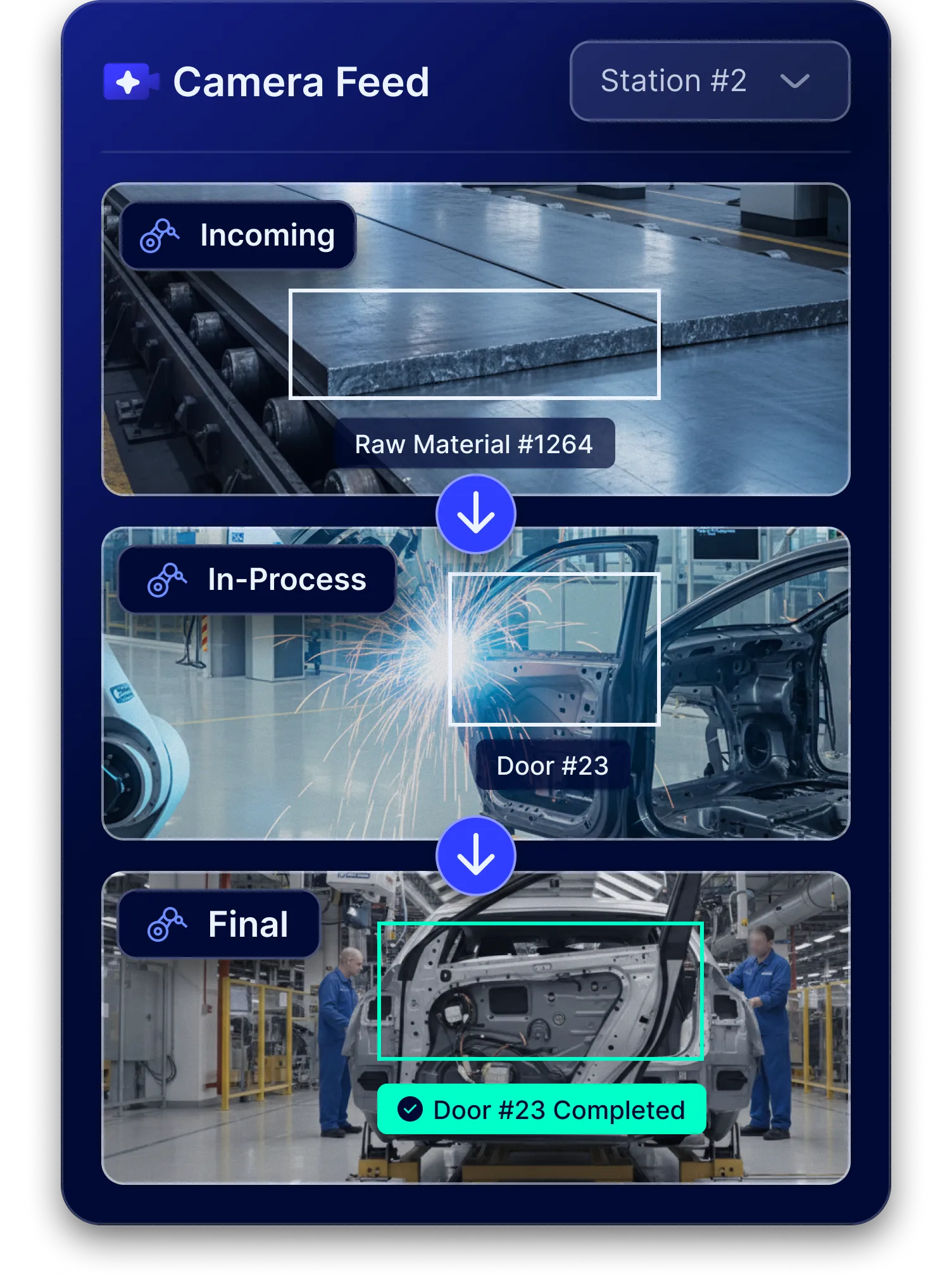
High-Speed Vision Detection for Any Product Flow
Whether your line runs at 10 parts per minute or 1,000, vision agents inspect every unit in real-time—detecting surface defects, dimensional deviations, and assembly errors without slowing production.
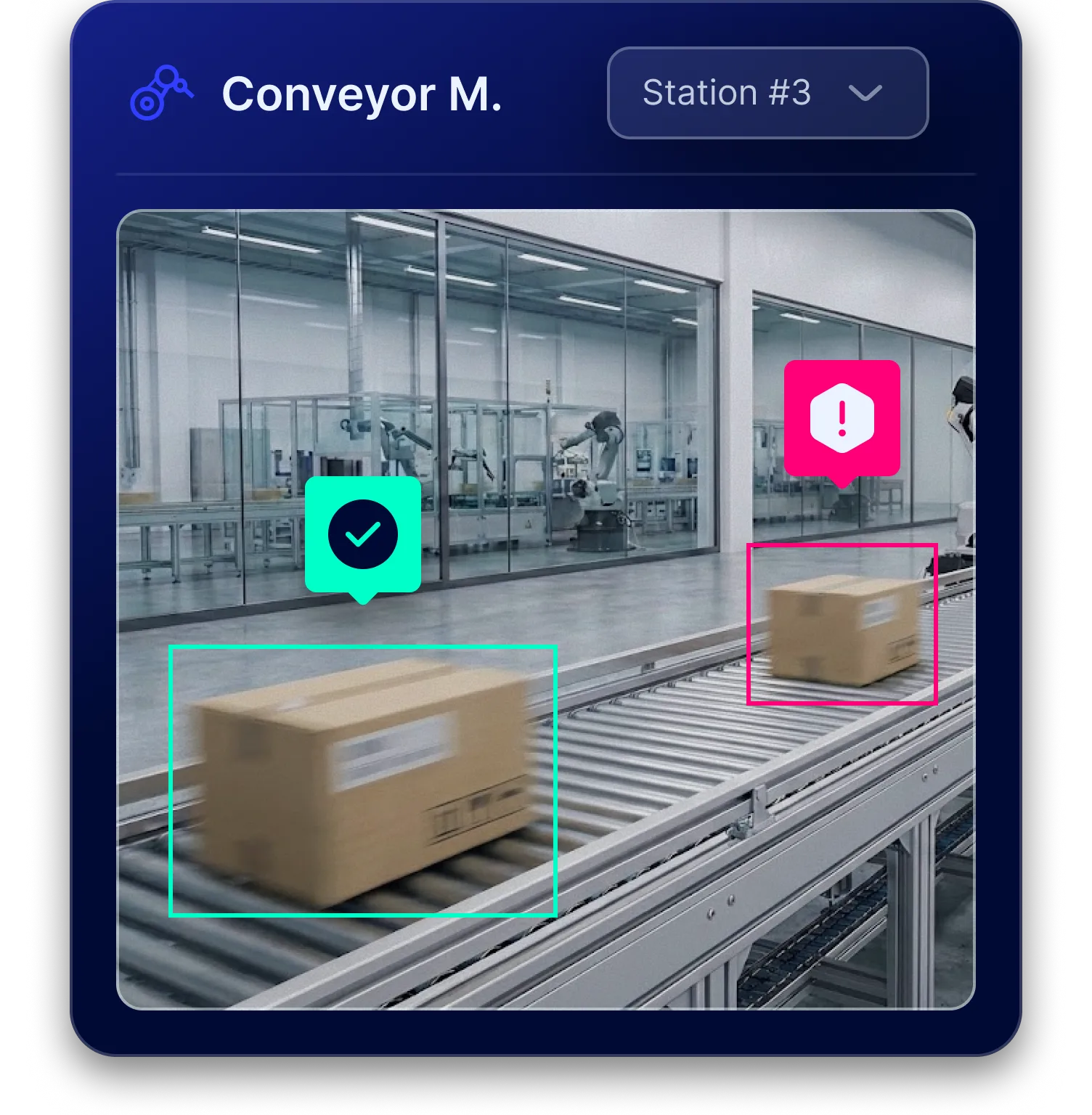
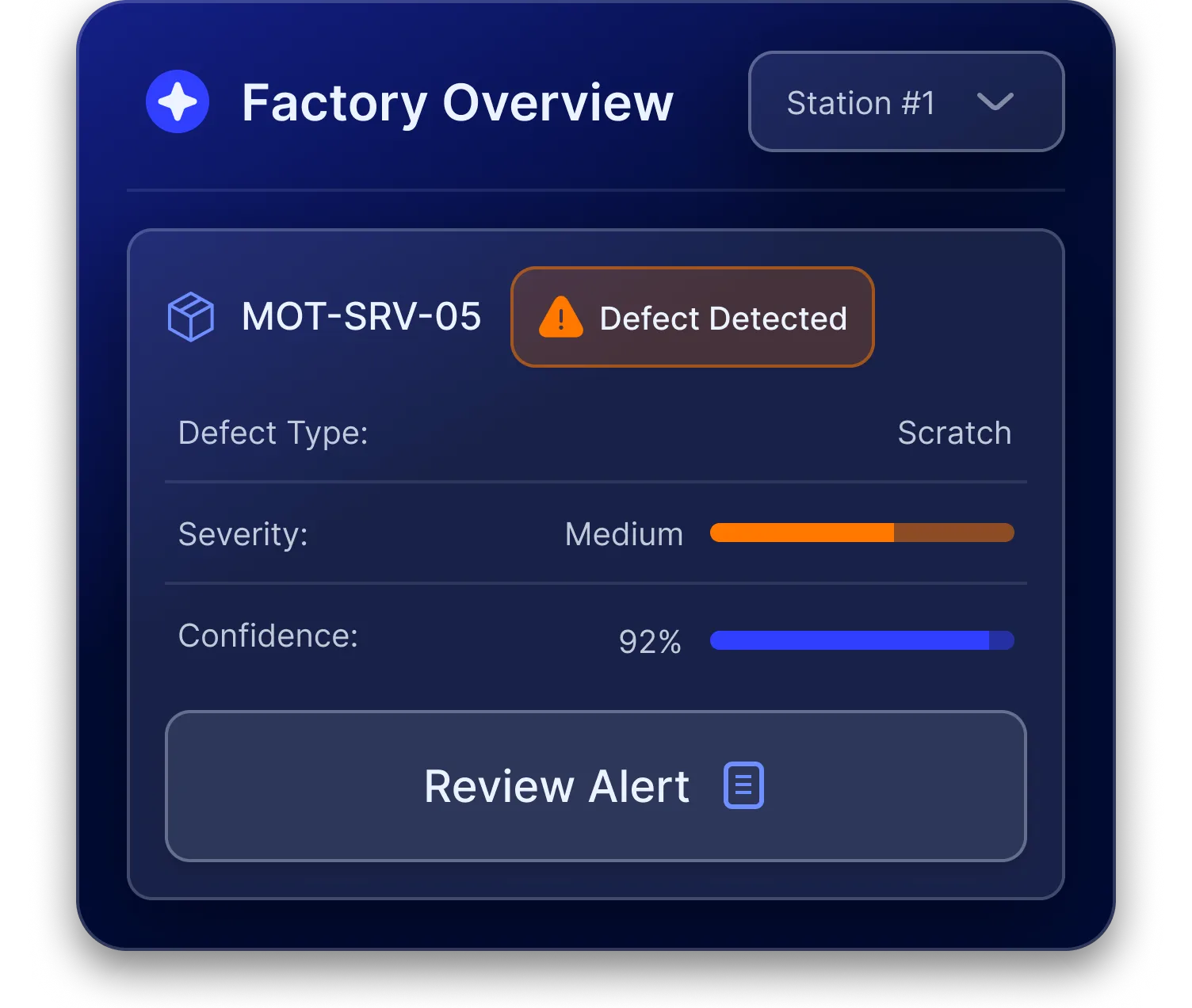
Automatic Defect Classification and Severity Scoring
When a defect is found, agents automatically classify it by type and severity—minor cosmetic issues, major functional defects, or critical safety concerns—so your team knows exactly what to prioritize.
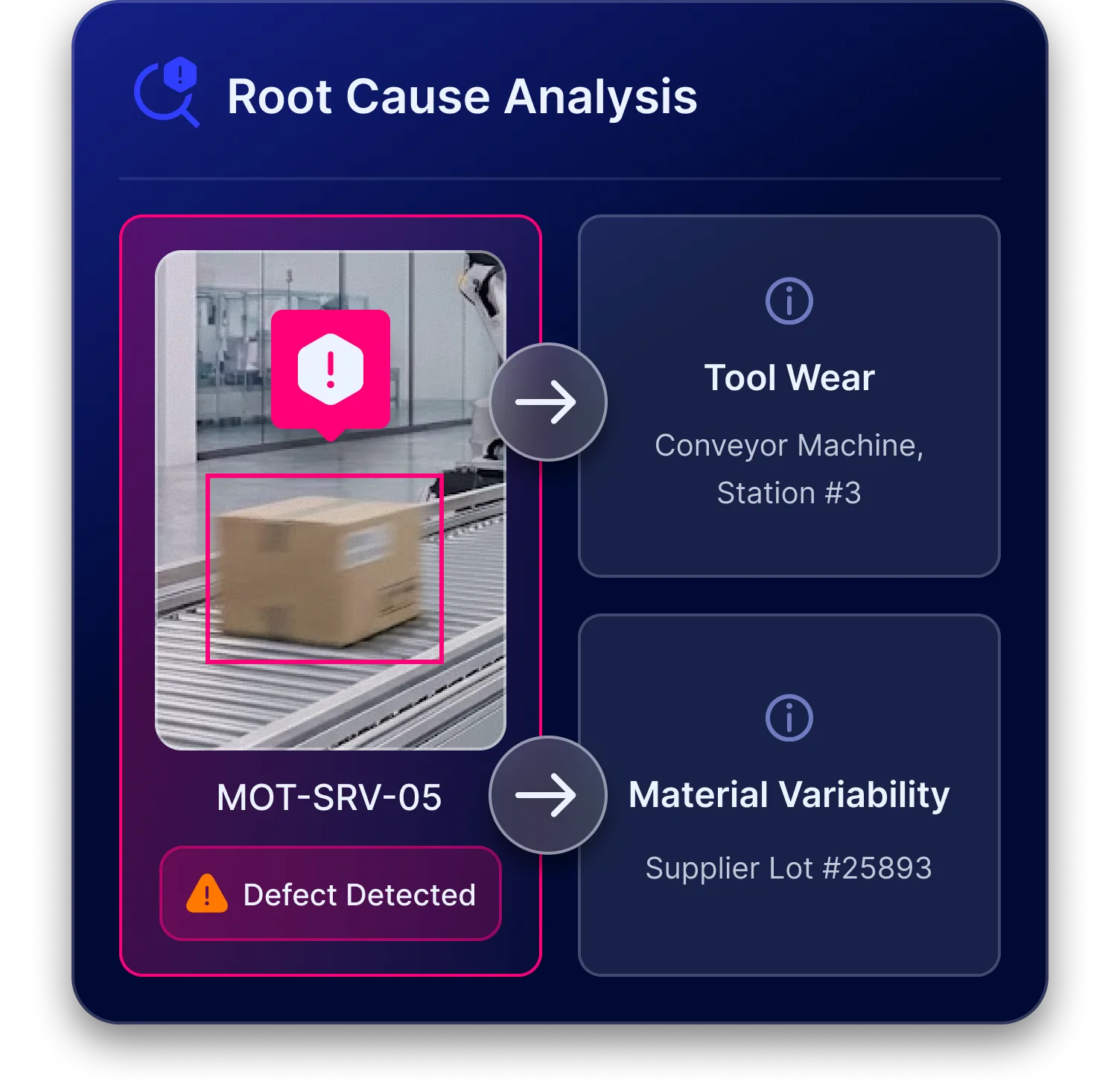
Link Defects to Upstream Causes
Agents correlate defect patterns with machine parameters, material batches, and process conditions to identify root causes—enabling targeted fixes instead of broad investigations.
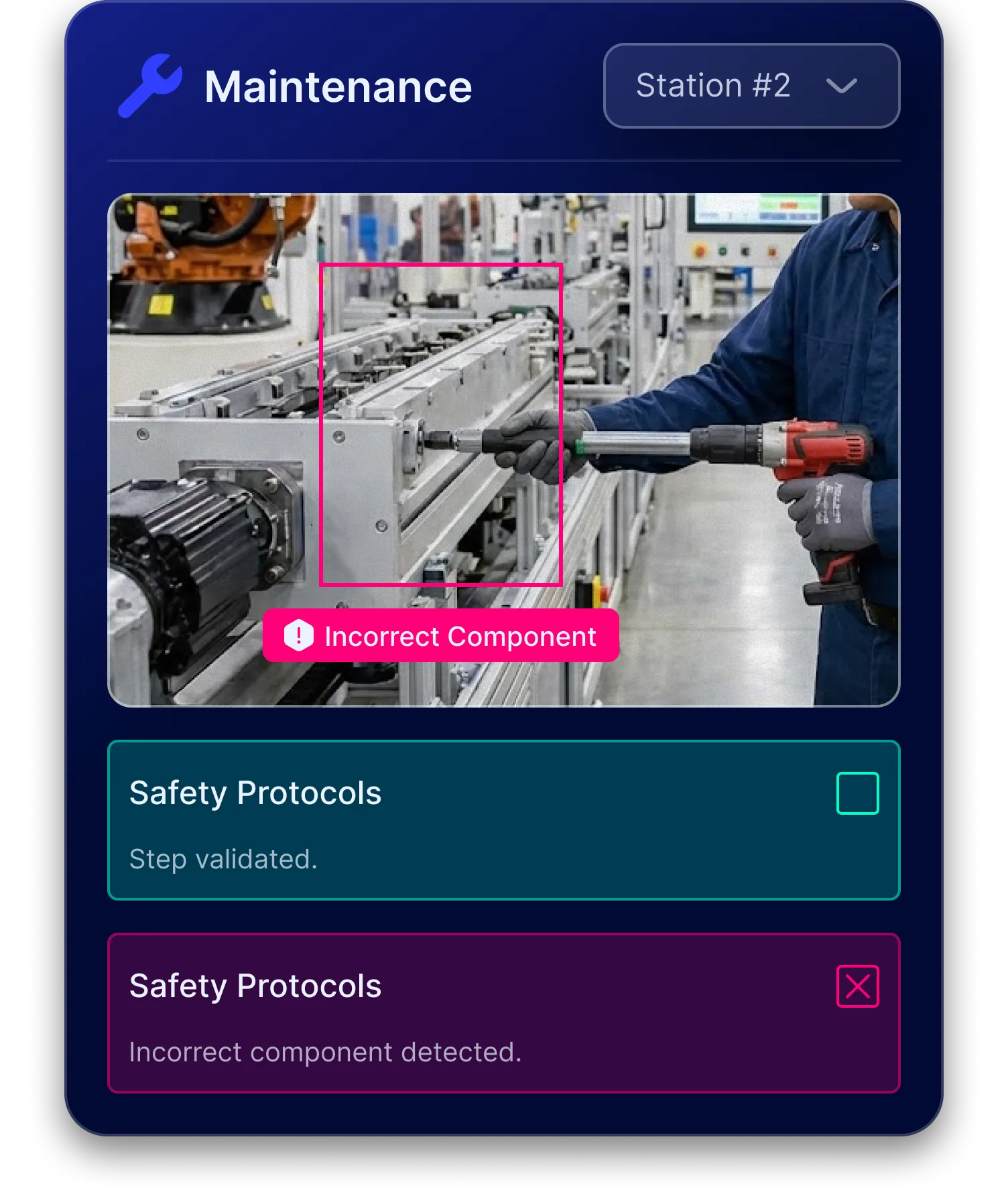
Reduced Manual Checks With Automated Verification
Replace tedious manual inspection with automated visual verification. Agents flag only the exceptions that need human review—dramatically reducing inspection labor while improving coverage.
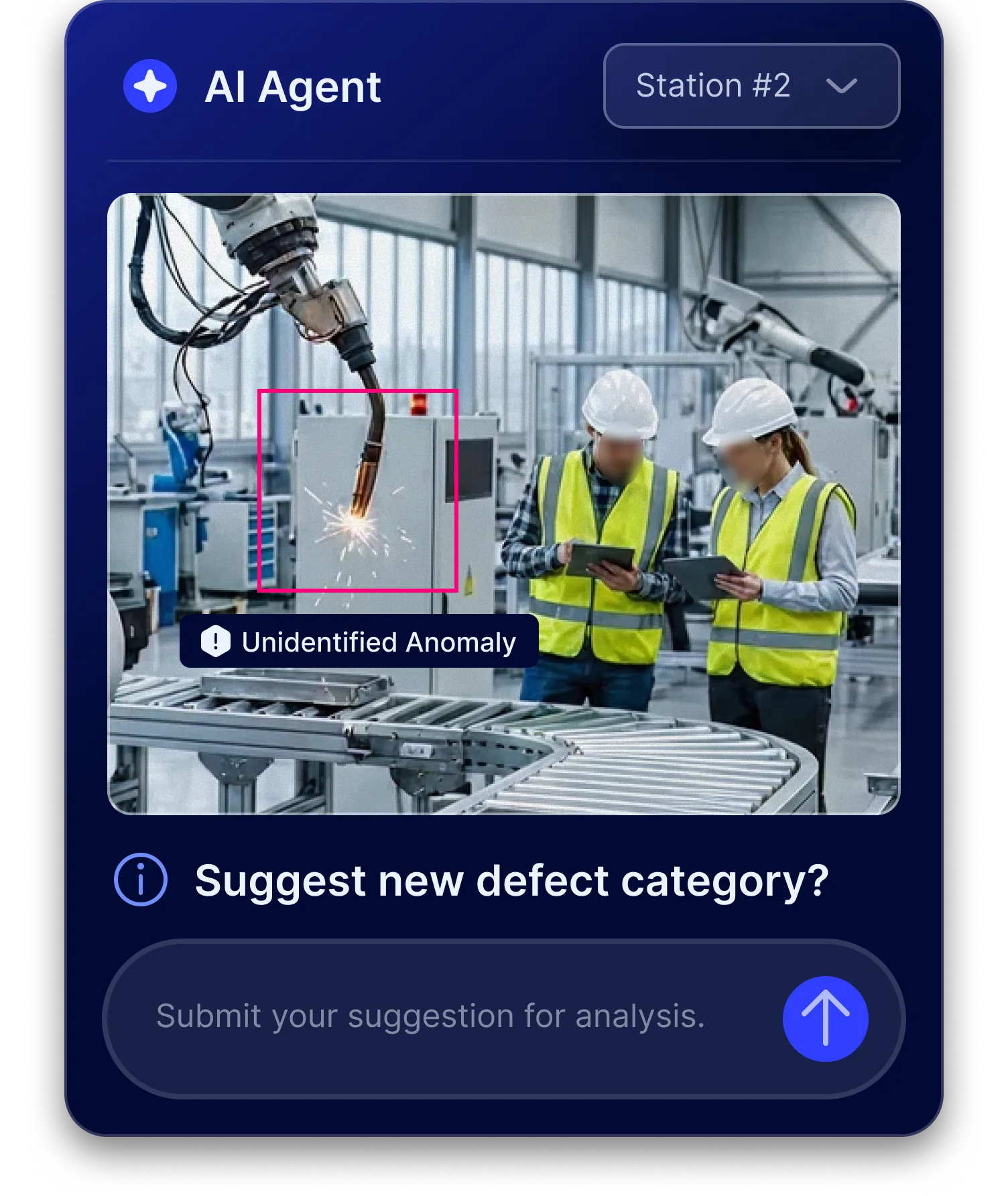
Continuous Learning From New Defects
Every confirmed defect becomes training data. Agents continuously improve their detection models, adapting to new products, materials, and failure modes without manual reprogramming.
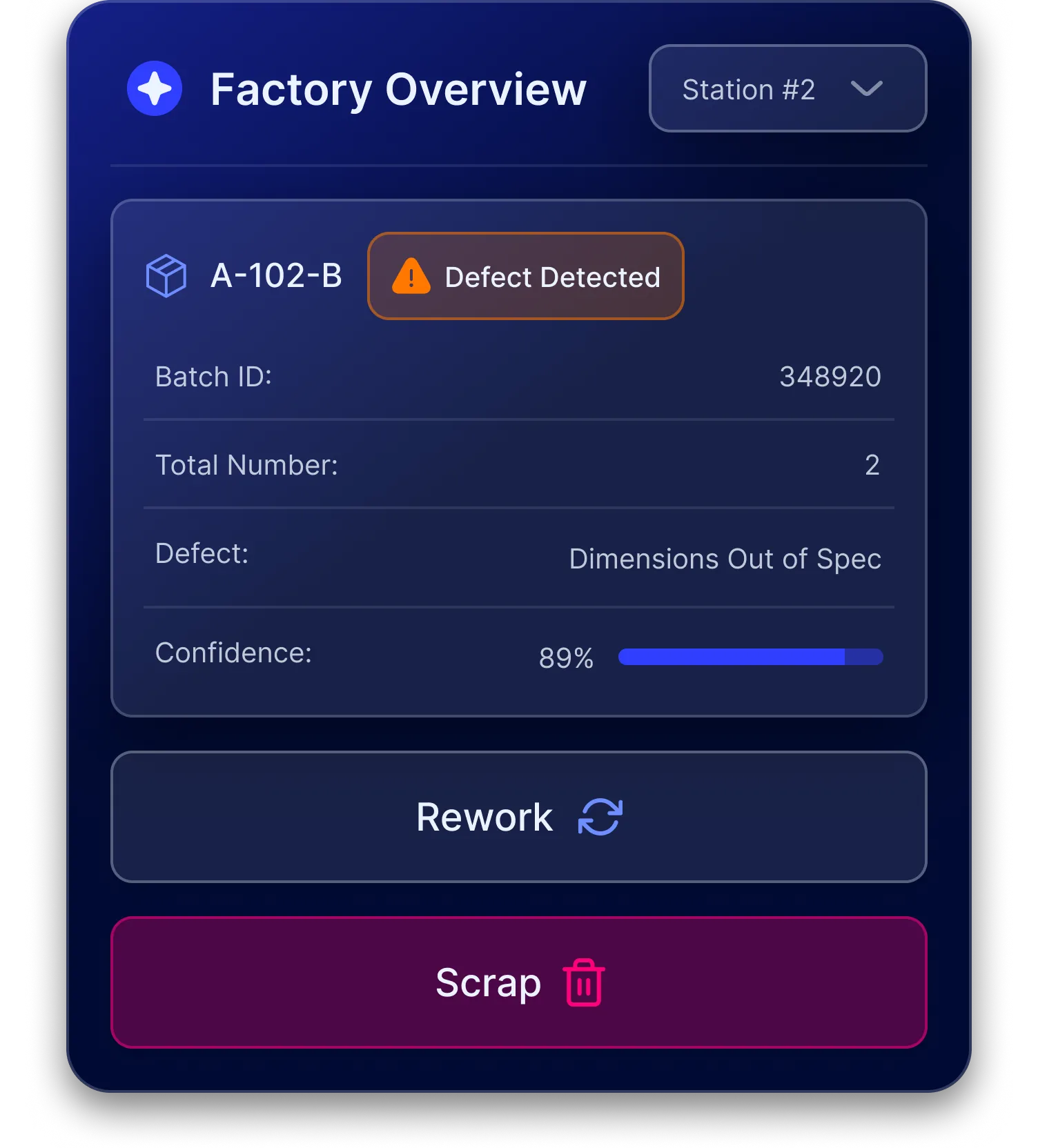
Automated Rework and Scrap Routing
Based on defect type and severity, agents automatically route parts to rework stations, scrap bins, or the next production stage—eliminating manual sorting decisions and reducing material waste.
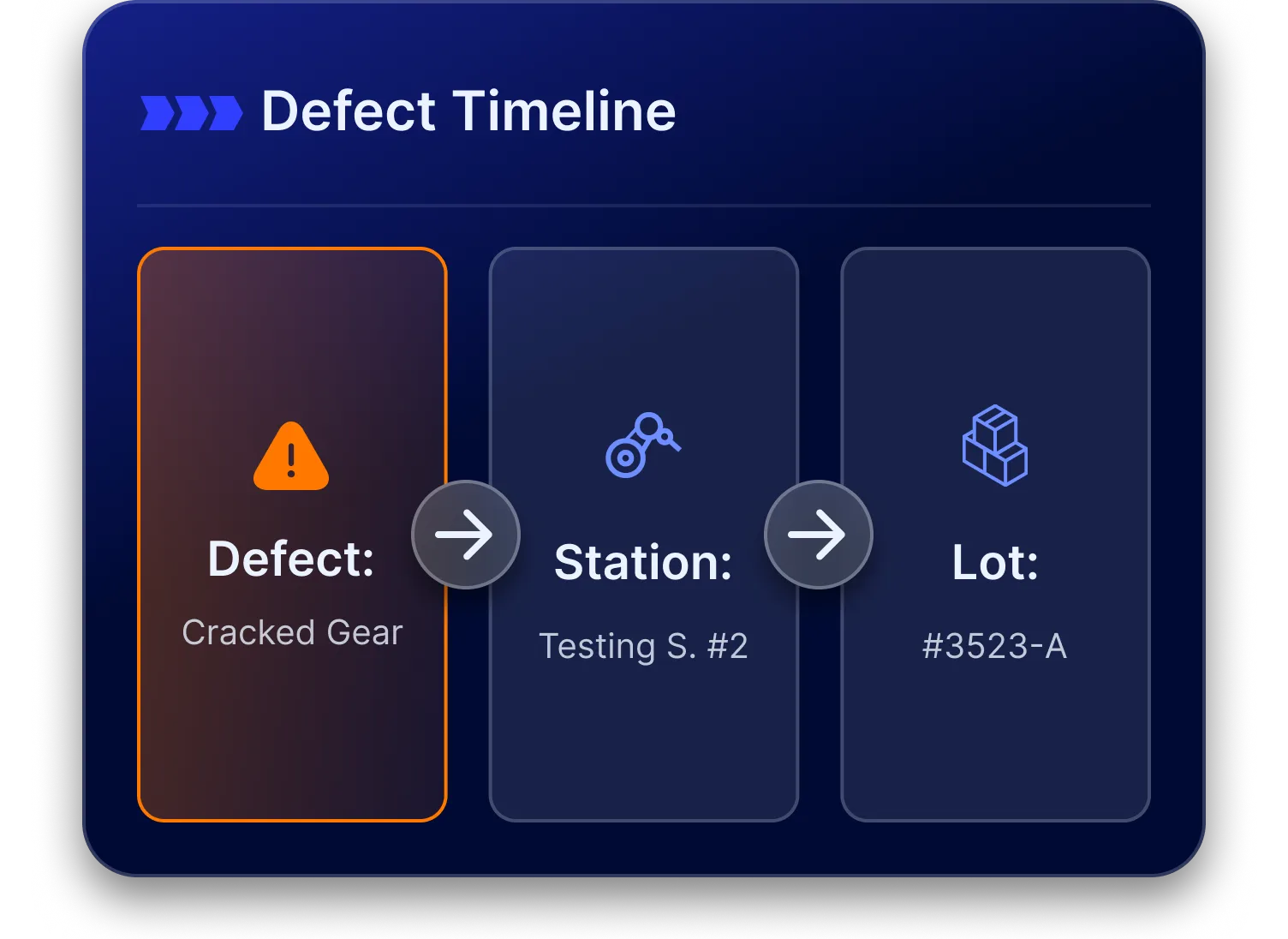
Full Traceability Across Batches, Lots, and Stations
Every inspection result is logged with timestamp, station, and decision. Trace any quality issue back to its source—supporting compliance audits, customer complaints, and continuous improvement.
Frequently Asked Questions
Manual Inspection vs AI-Powered Inspection
| Criteria | Manual Inspection | AI-Powered Inspection |
|---|---|---|
| Coverage | Sample-based (5-10%) | 100% of units inspected |
| Speed | Limited by human pace | Real-time at production speed |
| Consistency | Varies with fatigue and shift | Consistent 24/7 accuracy |
| Detection Rate | 80-90% typical | 99%+ for trained defect types |
| Documentation | Manual logs, often incomplete | Automatic with video evidence |
| Cost per Unit | High labor cost per unit | Decreasing cost at scale |
Related Solutions


