
 Supply Chain
End-to-end visibility, powered by agents that connect the dots
AccelVeo's AI agents give you complete visibility across your supply chain—predicting shortages, optimizing inventory, and synchronizing demand with production. Stop firefighting and start anticipating.
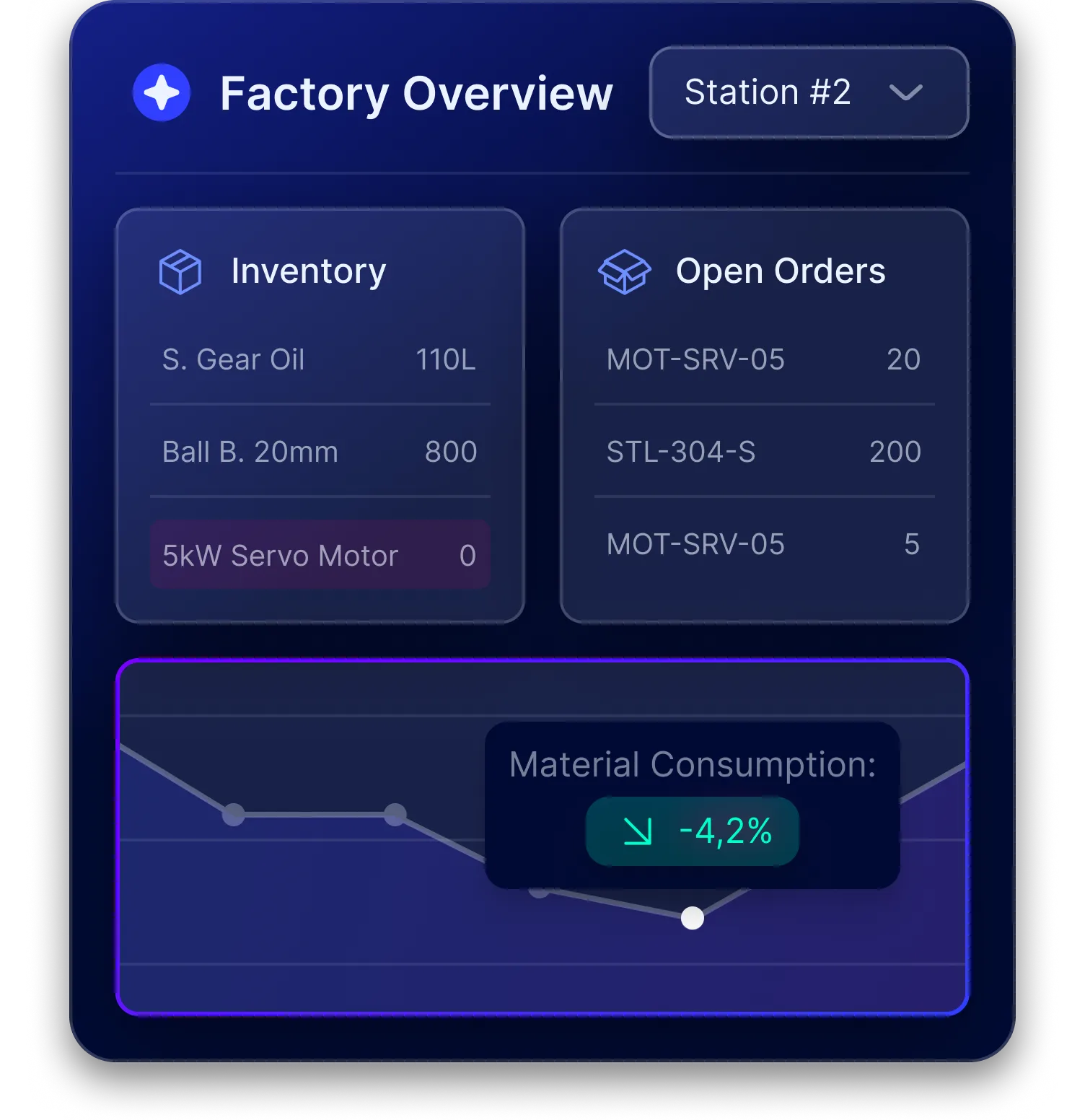
Unified View of Inventory, Orders, and Material Flow
AccelVeo gives you real-time visibility across your entire supply chain—from incoming raw materials to finished goods. See stock levels, order status, and material movement in one unified view, eliminating blind spots and silos.
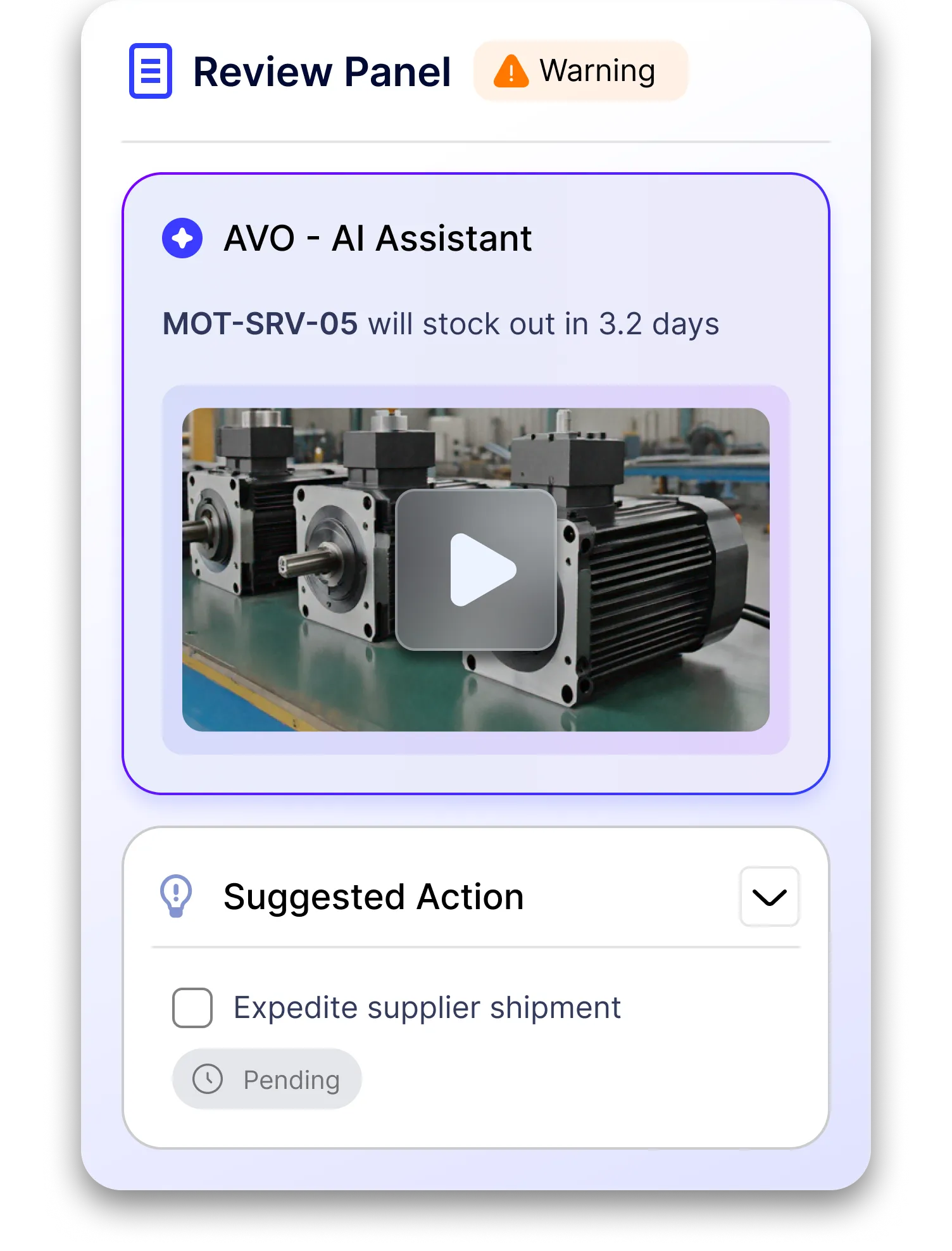
Predict Shortages Before They Hit the Line
AI agents continuously analyze consumption patterns, lead times, and production schedules to forecast material shortages days or weeks in advance—giving procurement time to act before production is impacted.
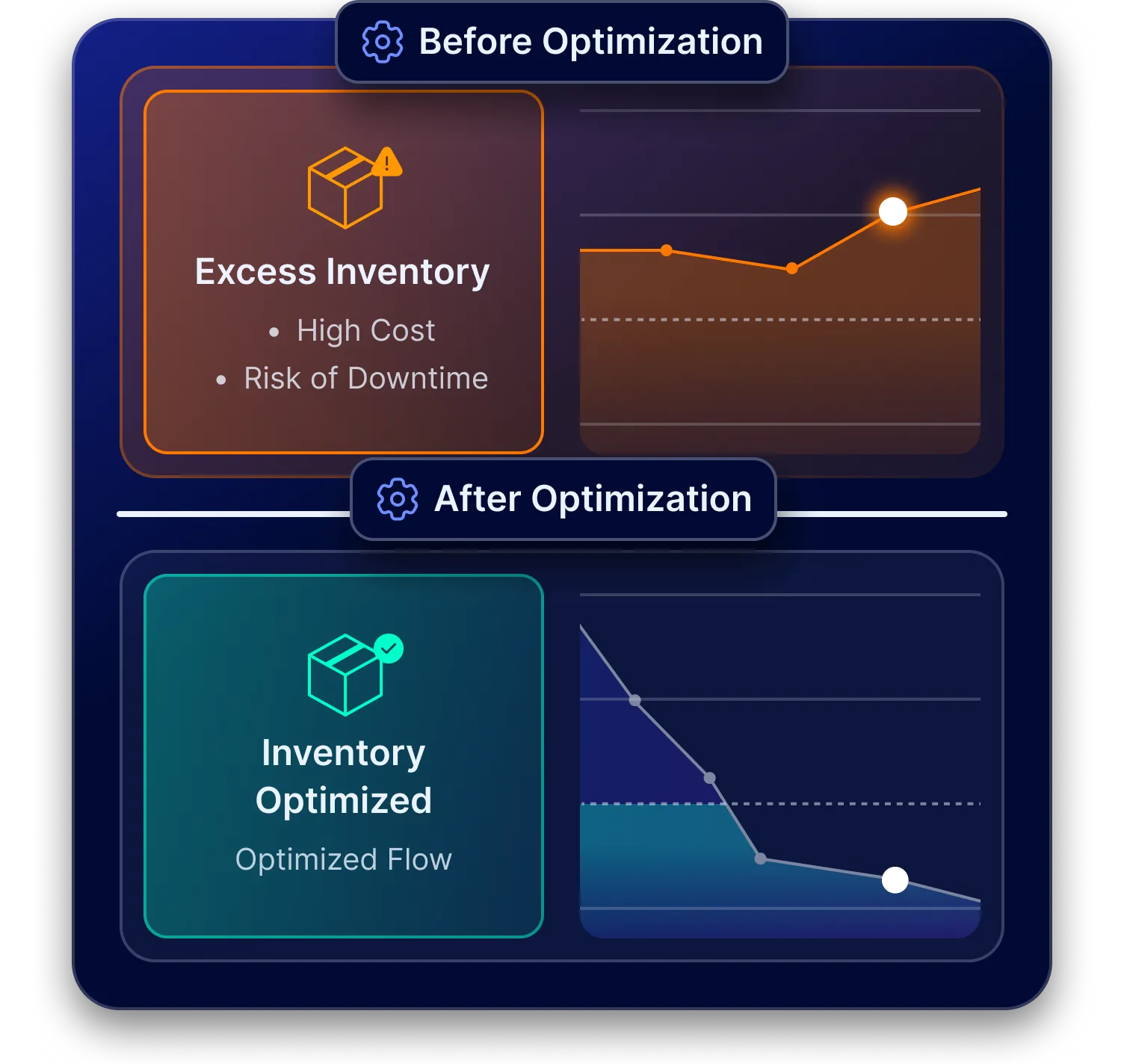
Smart Replenishment and Inventory Optimization
Balance carrying costs against stockout risk with AI-driven reorder recommendations. Agents factor in demand variability, supplier reliability, and lead times to suggest optimal order quantities and timing.
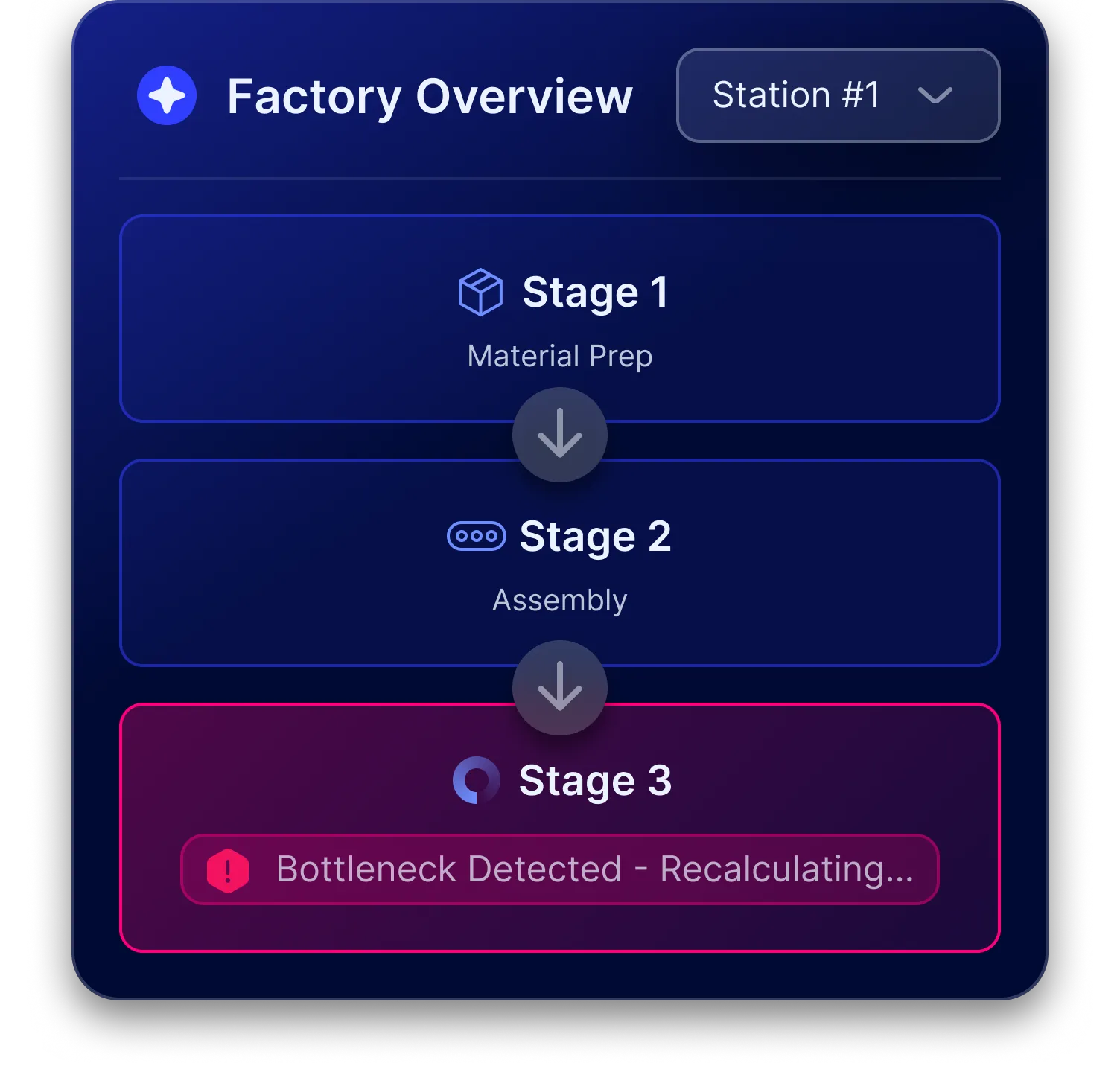
Bottleneck-Aware Production Alignment
When material constraints emerge, agents automatically identify production bottlenecks and recommend schedule adjustments to maximize throughput with available inventory.
Supplier Performance Insights and Risk Detection
Track supplier delivery performance, quality metrics, and reliability over time. Agents flag at-risk suppliers and suggest alternatives before disruptions occur.
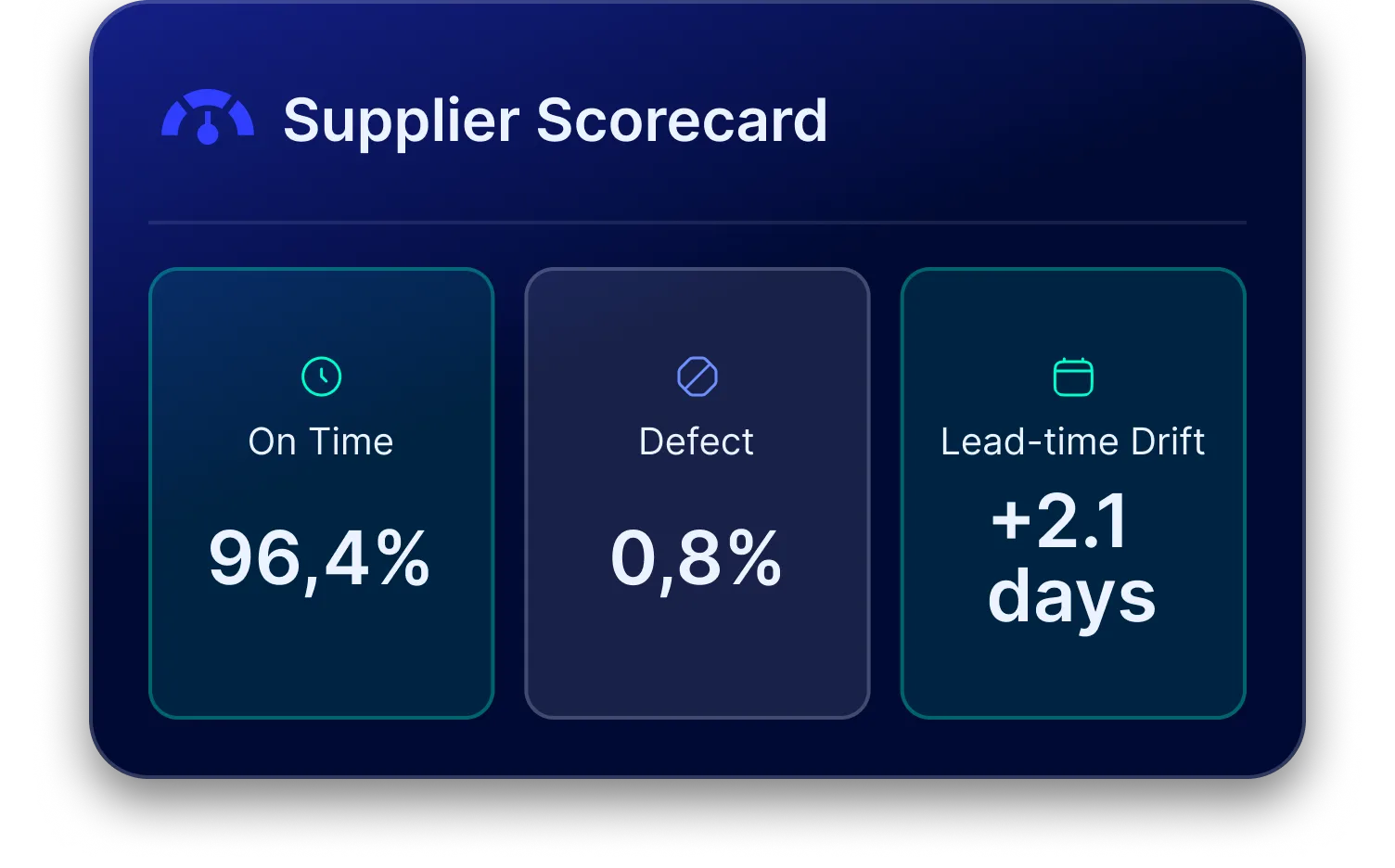
Demand + Production + Supply Synchronization
Align production capacity with customer demand and supplier capability. Agents continuously monitor and rebalance the system to prevent both overproduction and shortfalls.
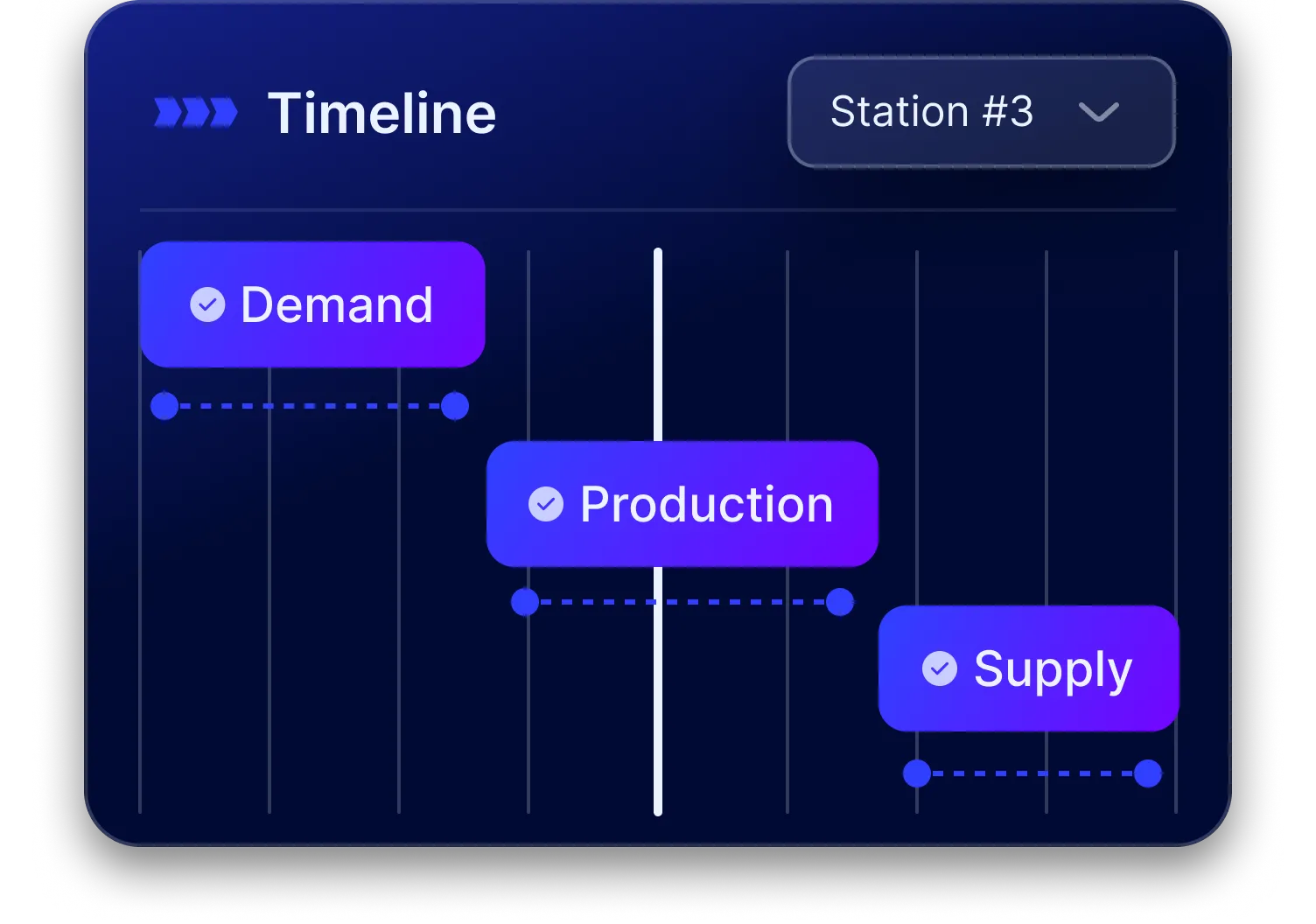
Automated Actions to Reduce Firefighting
From auto-triggered reorders to supplier rerouting and schedule adjustments, agents execute routine supply chain decisions automatically—freeing your team to focus on exceptions and strategic initiatives.
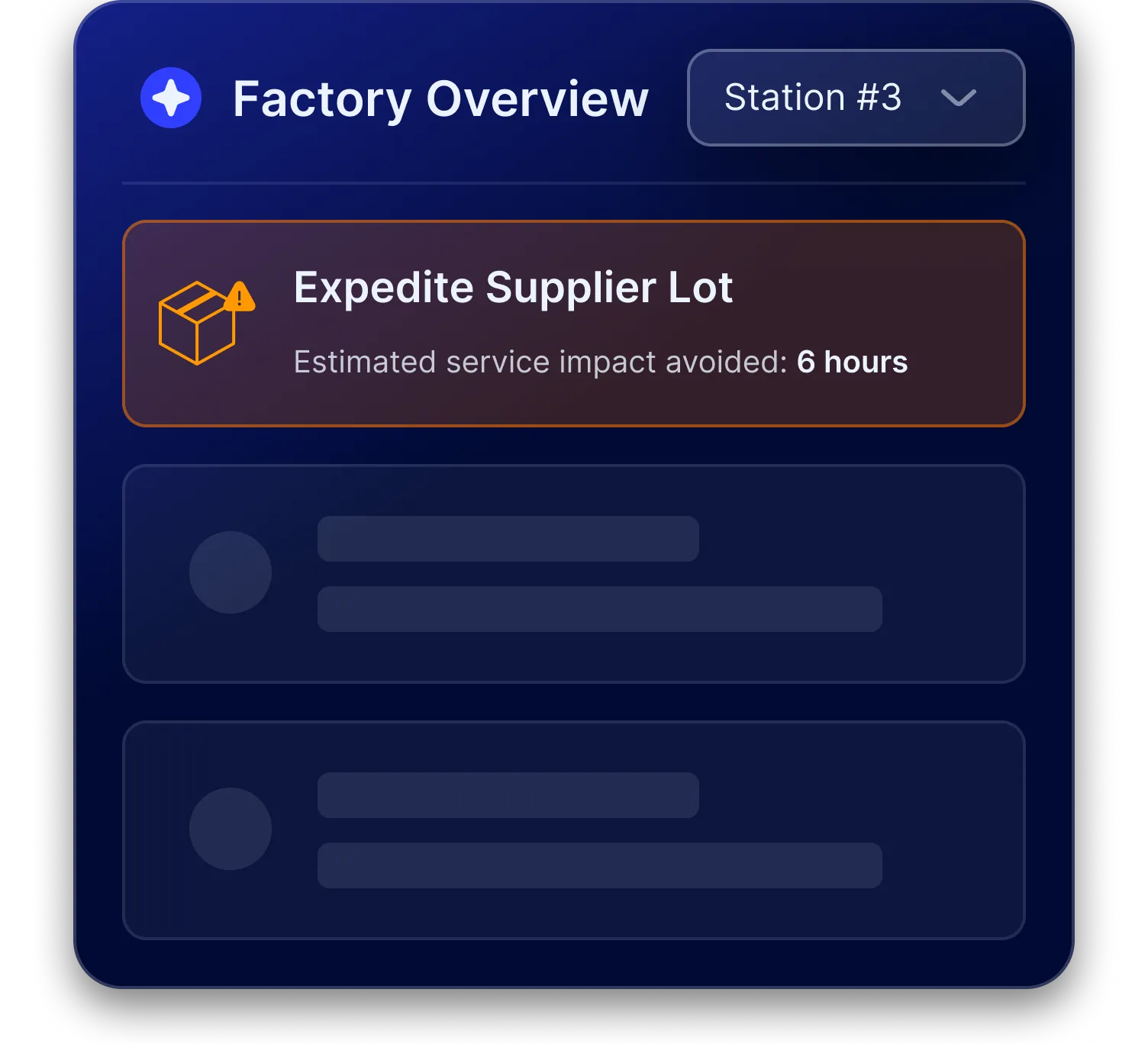
Real-Time Service Level Monitoring
Track key supply chain KPIs in real-time—on-time delivery, fill rates, lead times, and perfect order rates. Agents alert you when metrics drift from targets so you can course-correct early.
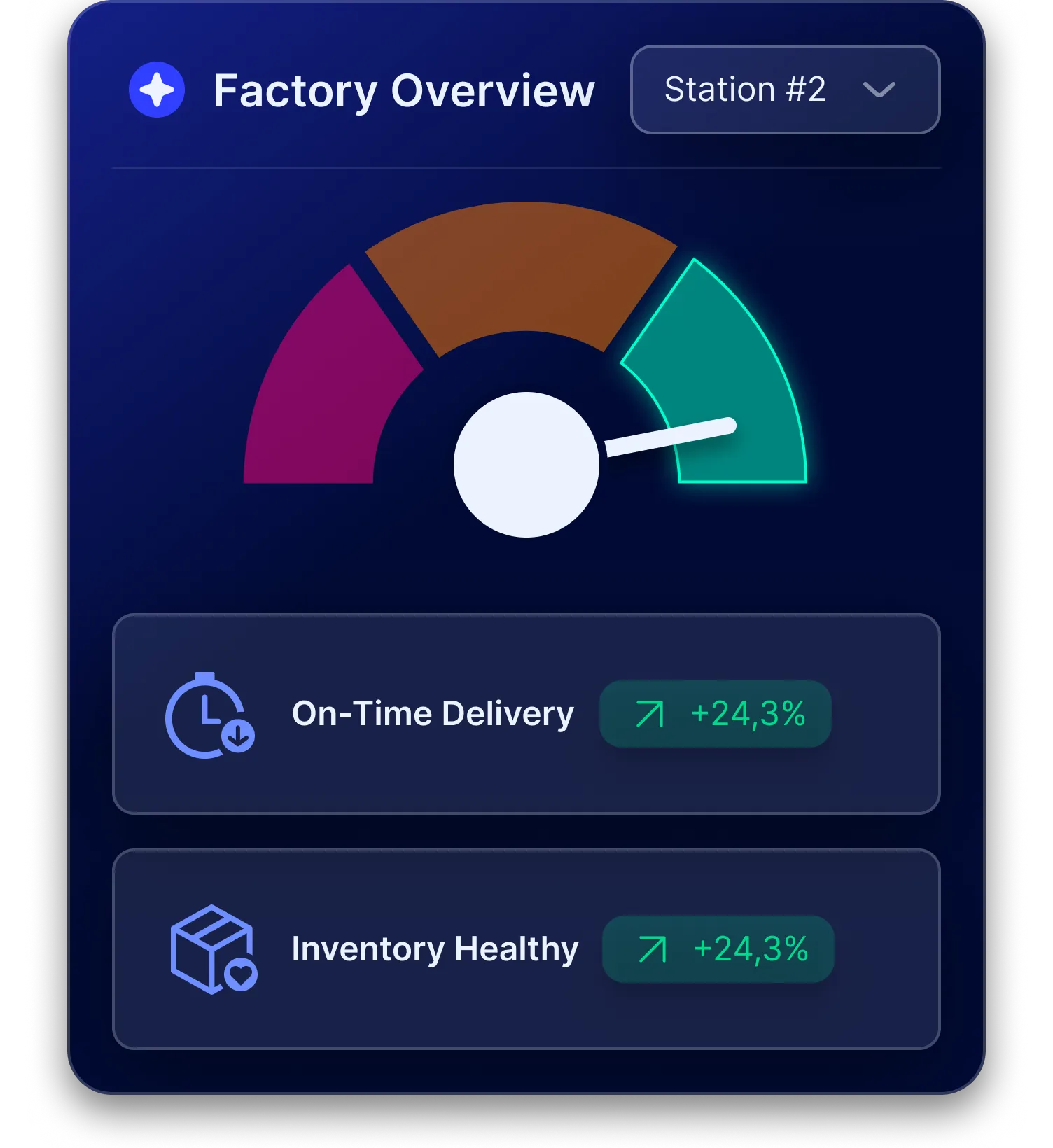
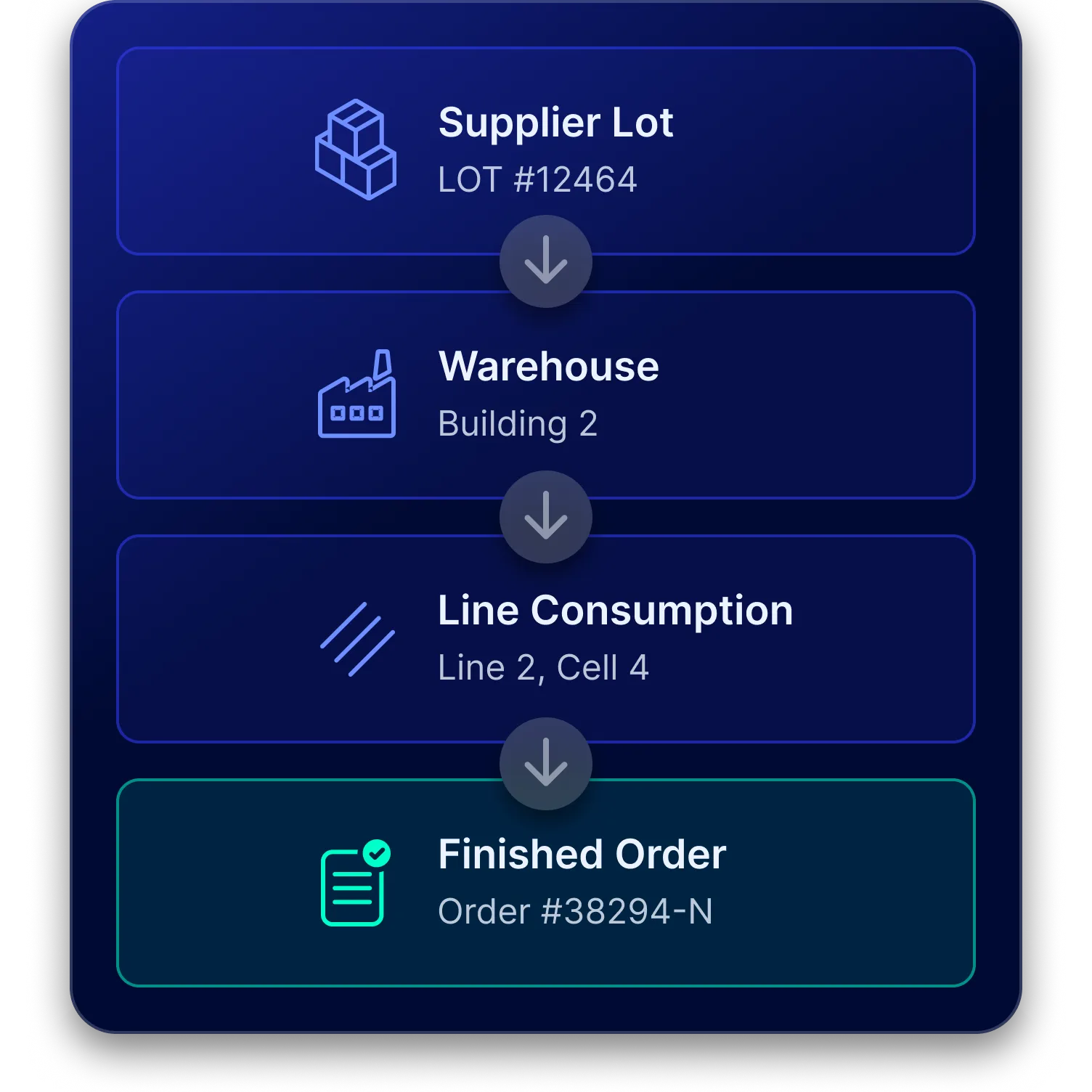
End-to-End Traceability for Better Decision Making
Trace any material, component, or product through its entire journey—from supplier receipt to customer delivery. Full visibility supports compliance, quality investigations, and continuous improvement.
Frequently Asked Questions
Traditional vs AI-Powered Supply Chain
| Criteria | Traditional | AI-Powered |
|---|---|---|
| Visibility | Fragmented across systems | Unified real-time dashboard |
| Forecasting | Spreadsheets, gut feel | ML-driven demand prediction |
| Shortage Response | Reactive — after stockout | Proactive — weeks in advance |
| Reorder Logic | Fixed reorder points | Dynamic, demand-adjusted |
| Supplier Risk | Discovered at disruption | Continuously monitored |
| Inventory Cost | High safety stock buffers | 15-25% lower carrying costs |
| Schedule Adjustments | Manual, slow | Automated, constraint-aware |
Related Solutions


